

Quick Summary: Fitting out a commercial space in Dubai takes 15 to 33 weeks and costs anywhere from AED 150 to AED 1,000+ per sq. ft. depending on what you need and where you are. This guide breaks down every step in plain language so you know exactly what to expect before spending a single dirham.
Who This Guide Is For
Whether you’re opening your first retail shop in Dubai Marina, setting up a new office in Business Bay, or relocating your company to a free zone this guide is written for business owners, entrepreneurs, and project managers who need a clear, honest picture of how interior fit-out works in Dubai.
We’ve seen projects run smoothly in 16 weeks. We’ve also seen them drag on for 9 months because of missed permits and rushed contractor choices. The difference almost always comes down to preparation and knowledge, which is exactly what this guide gives you.
What Is Interior Fit-Out?
An interior fit-out is the process of turning a bare, empty commercial space into a fully functional office or store complete with walls, flooring, lighting, air conditioning, electrical points, furniture, and signage.
Think of it this way: when a developer hands over a shell space, it’s just four walls and a concrete floor. Fit-out is everything that happens after that, until the day you open your doors for business.
The 9-Stage Fit-Out Process in Dubai
Stage 1: Brief and Concept (Week 1–2)
Before any design work begins, your fit-out consultant sits down with you to understand your business. They’ll ask about:
- How many people will work there?
- What does your brand look and feel like?
- Do you need special equipment server rooms, display counters, cold storage?
- What’s your budget ceiling?
From this conversation, the design team creates layout options, mood boards, and early 3D visuals so you can see what your space will look like before a single wall is built.
Pro tip from experience: Business owners who spend extra time on this stage almost always save money later. Changes at the concept stage cost nothing. Changes during construction can cost tens of thousands.
Stage 2: Detailed Design (Week 2–5)
Once you approve the concept, designers get into the technical details:
- Exact floor plans and ceiling layouts
- Electrical and plumbing coordination (called MEP)
- Finishes schedule which tiles, paints, and materials go where
- Lighting design
- Custom joinery and built-in furniture drawings
By the end of this stage, your project has a full set of drawings ready to submit to authorities.
Stage 3: Getting the Permits (Week 4–10)
This is where many Dubai fit-out projects slow down and it happens to even experiencedfit-out contractors in Dubai. Permits are non-negotiable in Dubai, and starting construction without them can result in heavy fines and forced demolition.
For Mainland Dubai spaces, you need:
- Dubai Municipality (DM) building permit
- Dubai Civil Defence (DCD) fire safety approval
- NOC from your building management or developer
- DEWA connections approval
For Free Zone spaces (DIFC, JAFZA, DAFZA, etc.):
- Approval from the relevant free zone authority
Realistic timeline: Allow 3 to 6 weeks. Drawings with errors get rejected and resubmitted this is the most common cause of delays we see.
Golden rule: Never start construction before your fit-out permit is in hand. No exceptions.
Stage 4: Choosing Your Contractor (Week 5–8)
While your permits are being processed, your consultant issues a detailed Bill of Quantities (BOQ) to shortlisted contractors. Multiple companies submit priced proposals, and you compare them not just on price, but on experience, reliability, and capacity.
What to check before signing any contract:
✅ Valid Dubai Municipality trade licence
✅ DM contractor registration
✅ Portfolio of similar completed projects (ask to visit one)
✅ How many active projects they’re currently running
✅ Client references you can actually call
Red flags that should make you walk away:
❌ Prices significantly lower than everyone else (usually means corners will be cut)
❌ No UAE trade license
❌ Cannot provide references
❌ Poor communication during the quoting process
❌ No warranty on workmanship
Stage 5: Construction (Week 8–24)
Once permits are issued and your contractor is appointed, physical work begins. Here’s how construction unfolds in phases:
| Phase | What Happens |
|---|---|
| Demolition & Strip-Out | Remove old partitions, flooring, and existing MEP |
| Structural Works | New openings, slab work |
| MEP First Fix | Pipes, conduits, and ducts hidden inside walls/ceilings |
| Partitions & Ceilings | Drywall walls, glass partitions, ceiling grids installed |
| MEP Second Fix | Light fittings, sockets, switches, AC grilles |
| Finishes | Flooring laid, walls painted, tiles fixed |
| Furniture & Signage | Furniture moved in, equipment installed, signage fitted |
Each phase requires sign-off before the next begins. Rushing this process is how quality problems start.
Stage 6: Daily Supervision (Throughout Construction)
A qualified site supervisor should be present every day not just once a week. Weekly site meetings should track progress, resolve technical queries, and document any design changes formally.
Clients who visit the site regularly tend to catch issues early. Those who trust everything blindly often discover problems at snagging.
Stage 7: DCD Fire Safety Inspection (Week 22–26)
When construction is complete, Dubai Civil Defence inspects your fire safety systems sprinklers, smoke detectors, emergency lighting, and fire exits.
There are three possible outcomes:
- Pass — DCD issues a completion certificate. You’re clear to proceed.
- Conditional Pass — Minor issues to fix within a set timeframe.
- Fail — Significant problems that require proper remediation and re-inspection.
After DCD clearance, apply for your DM fit-out completion certificate.
Stage 8: Snagging — The Quality Check (Week 25–27)
Snagging is a detailed walkthrough of the completed space to document every defect before you formally accept it. Common snag items include:
- Paint splashes or uneven patches
- Flooring gaps, chips, or misalignment
- Doors that don’t close properly
- Sockets or switches that don’t work
- Poor silicone joints or unfinished edges
Contractors typically have 7 to 14 days to fix all items on the snag list. Do not accept handover until the snag list is fully cleared.
Stage 9: Handover, The Moment You’ve Waited For
At handover, your contractor should hand you a complete package including:
- DM fit-out completion certificate
- DCD fire safety completion certificate
- As-built drawings (showing what was actually built)
- O&M manuals for all installed systems
- Warranties and guarantees in writing
- All keys and access cards
Keep every document. You’ll need them if you ever sell, sublease, or renovate the space.
How Much Does Fit-Out Cost in Dubai? (2026 Pricing)
This is the question everyone asks first. Honest answer: it depends heavily on your specification level and location. Here are real-world ranges based on current market data:
Office Fit-Out Costs
| Location | Basic (AED/sq.ft) | Standard (AED/sq.ft) | Premium (AED/sq.ft) |
|---|---|---|---|
| DIFC | 250–300 | 252–316 | 300–500 |
| Business Bay | 225–280 | 225–298 | 300–500 |
| JLT | 200–250 | 225–300 | 300–500 |
| Dubai South | 160–210 | 162–214 | 250–400 |
General office fit-out tiers:
Luxury: AED 600+/sq.ft — bespoke design, imported materials, premium everything
Basic: AED 150–250/sq.ft — functional, clean, no frills
Premium: AED 300–500/sq.ft — high-quality finishes, branded interiors
Retail Fit-Out Costs
Retail spaces typically cost more than offices because of display requirements, specialized lighting, and higher traffic durability demands.
| Retail Type | AED per sq.ft | AED per sq.m |
|---|---|---|
| Standard retail | 200–400 | 2,100–4,300 |
| High-end retail | 500–800 | 5,400–8,600 |
| Flagship store | 1,000+ | 10,700+ |
Exhibition Stand Costs (For Dubai Trade Shows)
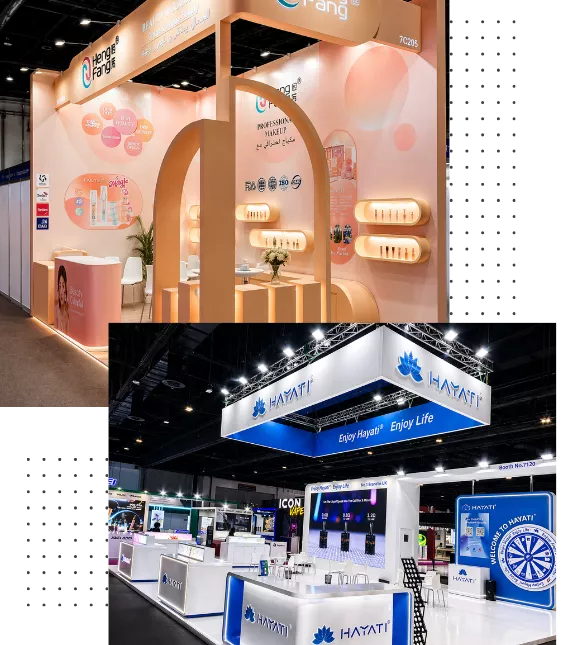
Planning to exhibit at GITEX, Arab Health, or Index? Here’s what exhibition stands cost:
| Stand Type | Cost per sqm (AED) | Best For |
|---|---|---|
| Shell Scheme | 800–1,200 | First-time exhibitors |
| Modular Stand | 1,200–2,000 | Growing mid-size brands |
| Custom-Built | 2,000–3,500 | Brands wanting a unique presence |
| Double-Decker | 3,500–5,000+ | Large brands needing VIP areas |
Realistic Timeline: How Long Will Your Fit-Out Take?
| Stage | Time Required |
|---|---|
| Concept and Design | 2–4 weeks |
| Authority Approvals | 3–6 weeks |
| Tender and Contractor Appointment | 2–3 weeks |
| Construction | 6–16 weeks |
| DCD Inspection and Final Approvals | 1–2 weeks |
| Snagging and Handover | 1–2 weeks |
| Total Project Duration | 15–33 weeks |
By Project Size:
| Space Size | Construction Only | Total Duration |
|---|---|---|
| Small office (1,000–3,000 sq.ft) | 4–8 weeks | 10–16 weeks |
| Medium commercial space | 8–16 weeks | 16–24 weeks |
| Large retail or office | 16–24 weeks | 24–36 weeks |
Planning to open by a certain date? Work backwards from your target opening and add a 4-week buffer. Projects rarely finish ahead of schedule in Dubai but they can and do finish on time when planned properly.
Why Dubai Fit-Out Projects Get Delayed (And How to Avoid It)
Understanding the most common delay causes helps you plan around them:
1. Authority approval rejections — Usually caused by drawing errors or missing documentation. Fix: Use an experienced consultant who knows exactly what DM and DCD require.
2. Slow NOC from building management — This alone can take 3 to 4 weeks. Fix: Start the NOC process the moment you sign your lease.
3. Imported material delays — Custom tiles, joinery, or lighting from Europe or Asia can take 8 to 12 weeks to arrive. Fix: Finalize material selections early and order immediately.
4. Design changes during construction — Every change after construction begins causes delays and cost overruns. Fix: Be decisive during the design stage.
5. DCD inspection failure — Avoidable with a good contractor who knows fire safety compliance inside out.
6. Late client decisions — Delaying approval of finishes or furniture holds up the entire project. Fix: Build decision-making deadlines into your project plan and stick to them.
How to Choose the Right Fit-Out Contractor in Dubai
The contractor you choose will make or break your project. Here’s a practical checklist:
Before you shortlist anyone, verify:
- Valid UAE trade licence (check DED or the relevant free zone authority)
- DM-approved fit-out contractorregistration certificate
- Insurance coverage ask for a certificate of insurance
- Physical office address in UAE (not just a mobile number)
- Can they show you a completed project similar to yours?
During evaluation:
- Get a minimum of 3 quotes using the same BOQ
- Meet the actual project manager who will run your job
- Ask what happens if they encounter a problem they didn’t quote for
- Ask for 3 client references and actually call them
Questions to ask references:
Would you use them again?
Was the project delivered on time?
Was the final cost close to the original quote?
How did they handle problems when they arose?
Conclusion
Interior fit-out in Dubai is a structured, regulated process and that’s actually a good thing. The permit requirements, inspections, and contractor qualifications that can feel like obstacles are the same systems that protect your investment and ensure your space is safe, compliant, and built to last.
The businesses that navigate fit-out successfully share three things: they start planning early, they choose qualified partners, and they make decisions quickly when decisions are needed.
Do those three things, and your fit-out has every reason to go smoothly.
Interior Fit-Out Design & Construction FAQs
Q1. How long does a commercial fit-out take in Dubai?
Between 15 to 33 weeks depending on space size and complexity. Small offices take 10 to 16 weeks. Always add a 4-week buffer to your target opening date.
Q2. How much does interior fit-out cost in Dubai in 2026?
From AED 150 to AED 1,000+ per sq.ft depending on finish level. Basic offices start at AED 150, premium retail runs AED 500 to 800, and flagship stores exceed AED 1,000 per sq.ft.
Q3. What permits are required for a fit-out in Dubai?
Mainland spaces need a Dubai Municipality permit, DCD fire safety approval, NOC from building management, and DEWA approval. Free zone spaces require approval from their own authority. Allow 3 to 6 weeks for processing.
Q4. What causes fit-out project delays in Dubai?
The most common causes are permit rejections, slow NOC processing, imported material delays, mid-construction design changes, and late client decisions. Most delays are avoidable with early planning and fast decision-making.
Q5. What happens during snagging in a Dubai fit-out?
A detailed quality walkthrough documenting every defect paint, flooring, doors, sockets, and joints. Contractors get 7 to 14 days to fix everything. Never accept handover before the snag list is fully cleared.
Q6. What documents should I receive at fit-out handover?
You should receive the DM completion certificate, DCD fire safety certificate, as-built drawings, O&M manuals, written warranties, and all keys and access cards. Keep every document safely.
Q7. How do I choose the right fit-out contractor in Dubai?
Verify their UAE trade license, DM registration, and insurance. Get at least 3 quotes, meet the actual project manager, and call references. Avoid contractors quoting significantly lower than everyone else.