

Every exhibitor asks this question sooner or later: how much time should I actually give myself before show day? It’s a fair concern. An exhibition stand isn’t something you can order off a shelf; it moves through design, approval, fabrication, and installation before it ever touches the show floor. Understanding this timeline, and what can speed it up or slow it down, is one of the smartest things a business can do before committing to a trade show.
Why the Exhibition Stand Timeline Matters
Booking a stand too late is one of the most common mistakes first-time exhibitors make. Venues have submission deadlines for structural approvals, materials need lead time to arrive, and fabrication teams need real working days, not rushed ones, to deliver something that reflects your brand properly. Planning backwards from your show date, rather than forwards from “whenever we get around to it,” is what separates a smooth build from a stressful, last-minute scramble.
The Complete Exhibition Stand Timeline
Initial Planning and Briefing
This is where everything starts. You share your objectives, budget, floor space, and brand requirements with your contractor. A good briefing session usually takes a few days of back-and-forth, but it sets the direction for everything that follows. Skipping this step, or rushing it, tends to cause expensive changes later.
Concept Development and Exhibition Stand Design
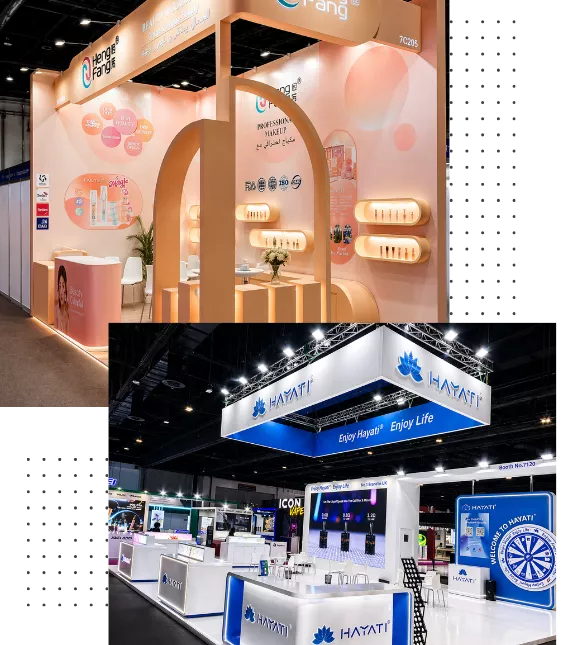
Once the brief is locked, the design team gets to work. This is the creative core of the process: translating your goals into a physical layout, complete with 3D renders so you can visualize the space before anything is built. Strong exhibition stand design takes into account traffic flow, brand storytelling, and how visitors will actually move through and interact with the space, not just how it looks in a static image.
Design Approval
You review the renders, request revisions if needed, and sign off on the final version. This stage can move quickly if decision-makers are available and responsive, or drag on for weeks if approvals get stuck in internal review chains. It’s one of the few parts of the timeline that’s almost entirely in the client’s hands.
Material Selection
Wood, metal, acrylic, and fabric all behave differently, cost differently, and take different amounts of time to source and work with. Custom finishes or imported materials can add days to the schedule, so this decision is usually finalized alongside the design approval to avoid delays further down the line.
Production and Fabrication
This is the longest phase for anything beyond a basic stand. Panels are cut, structures are assembled, and everything is quality-checked before it leaves the workshop. Contractors with in-house manufacturing, rather than outsourced production, tend to move faster here because there’s no waiting on a third party’s schedule.
Graphics and Branding
Large-format prints, backlit panels, and branded signage are usually produced in parallel with fabrication so they’re ready the moment the structure is complete. This overlap is one of the easiest ways an experienced team saves time without cutting corners.
Transportation and Logistics
Once built and checked, the stand is disassembled into transportable sections and moved to the venue. Timing here depends on venue access windows, which are often tightly scheduled across dozens of exhibitors building simultaneously.
On-Site Installation and Testing
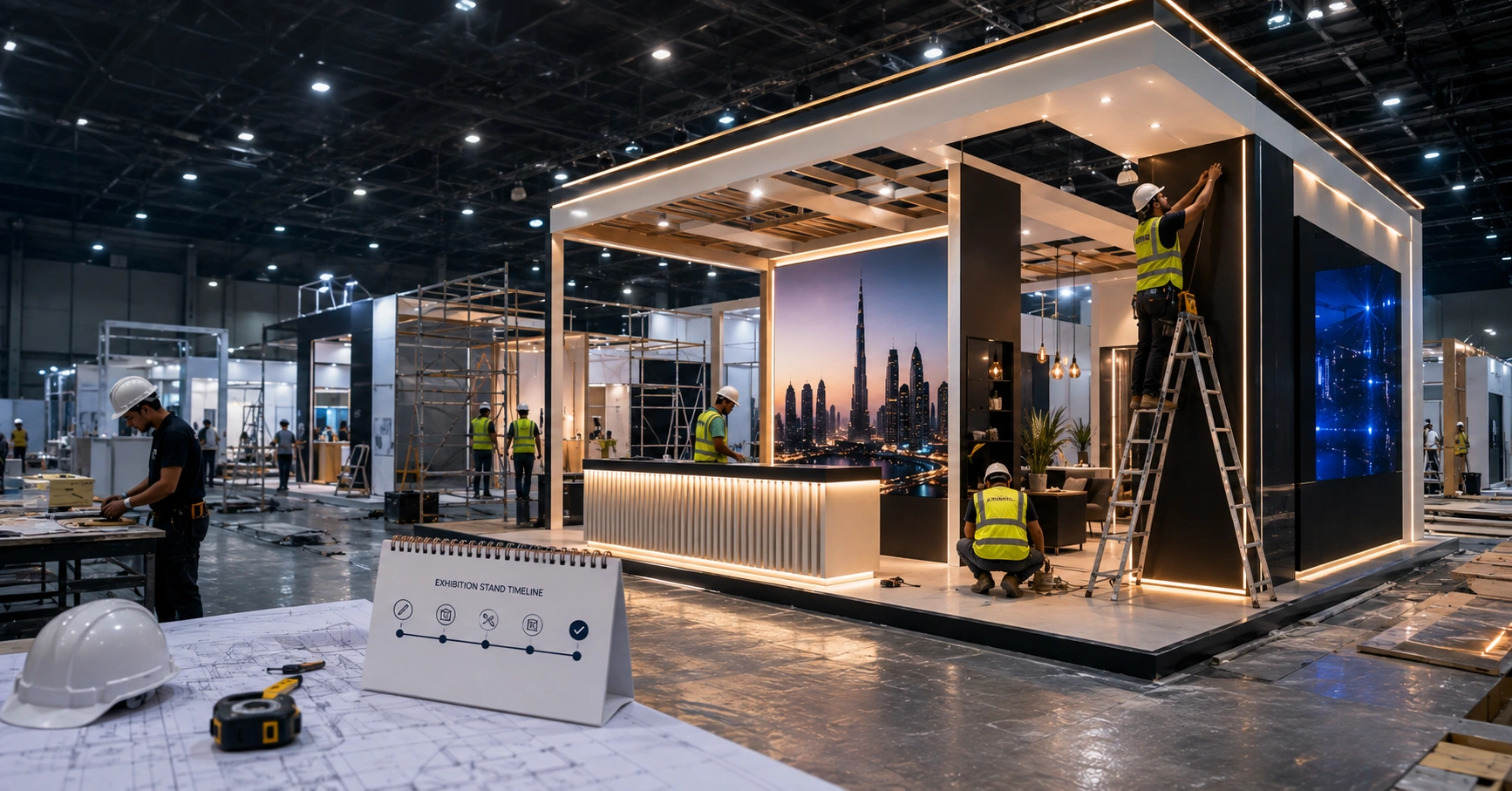
The stand is reassembled on-site, lighting and AV are tested, and finishing touches are applied. This is also when any last-minute adjustments happen, so a buffer day before the show opens is always worth building into the schedule.
Final Inspection and Dismantling
After installation, a final walkthrough confirms everything matches the approved design and meets venue safety standards. Once the show ends, the stand is dismantled, often within a strict overnight window, and either stored for reuse or disposed of responsibly.
| Factor | Impact on Timeline |
|---|---|
| Stand size | Larger footprints require more fabrication and installation time |
| Design complexity | Hanging structures, double-decker levels, or custom shapes add build days |
| Custom fabrication | Bespoke elements take longer than modular, reusable components |
| Graphics volume | Extensive branding across a large stand needs more print and finishing time |
| Technology integration | LED screens, interactive displays, and AV systems require additional testing |
| Venue regulations | Some halls require structural approvals weeks in advance |
| Approval delays | Slow client sign-off is one of the most common causes of a compressed schedule |
| Last-minute changes | Even small revisions after fabrication has started can push back the entire timeline |
Estimated Timelines by Stand Type
Simple or Modular Stands
For smaller booths using pre-engineered modular systems, two to three weeks is typically enough, covering design, minor customization, and installation.
Medium or Custom Stands
Custom builds with unique layouts, branded finishes, and moderate technology integration generally need four to six weeks from initial briefing to installation.
Large or Complex Stands
Double-decker structures, country pavilions, or stands with heavy AV integration and bespoke fabrication often require eight weeks or more, particularly when venue approvals are involved.
Planning Ahead With Experienced Exhibition Stand Builders
Working with established exhibition stand builders in dubai makes a measurable difference to how predictably this timeline plays out. Teams with in-house production facilities, regional venue experience, and structured project management can compress build times without sacrificing quality, something that’s much harder to achieve when work is scattered across multiple subcontractors. Reputable exhibition stand builders will also flag potential delays early, rather than letting them surface days before the show opens.