
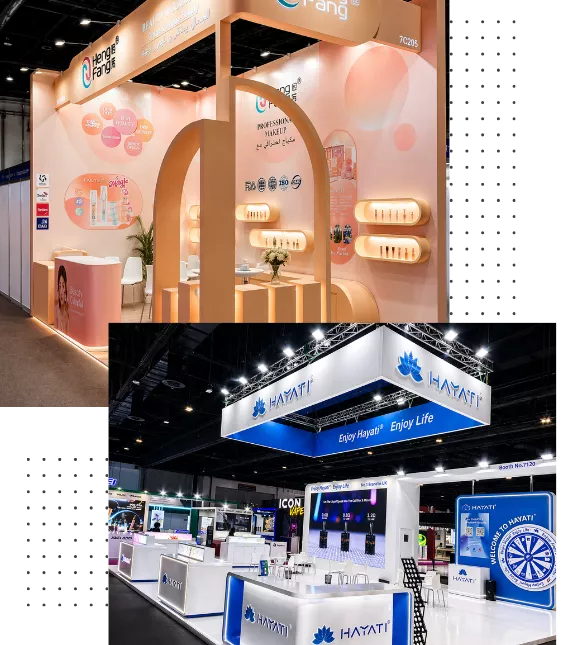
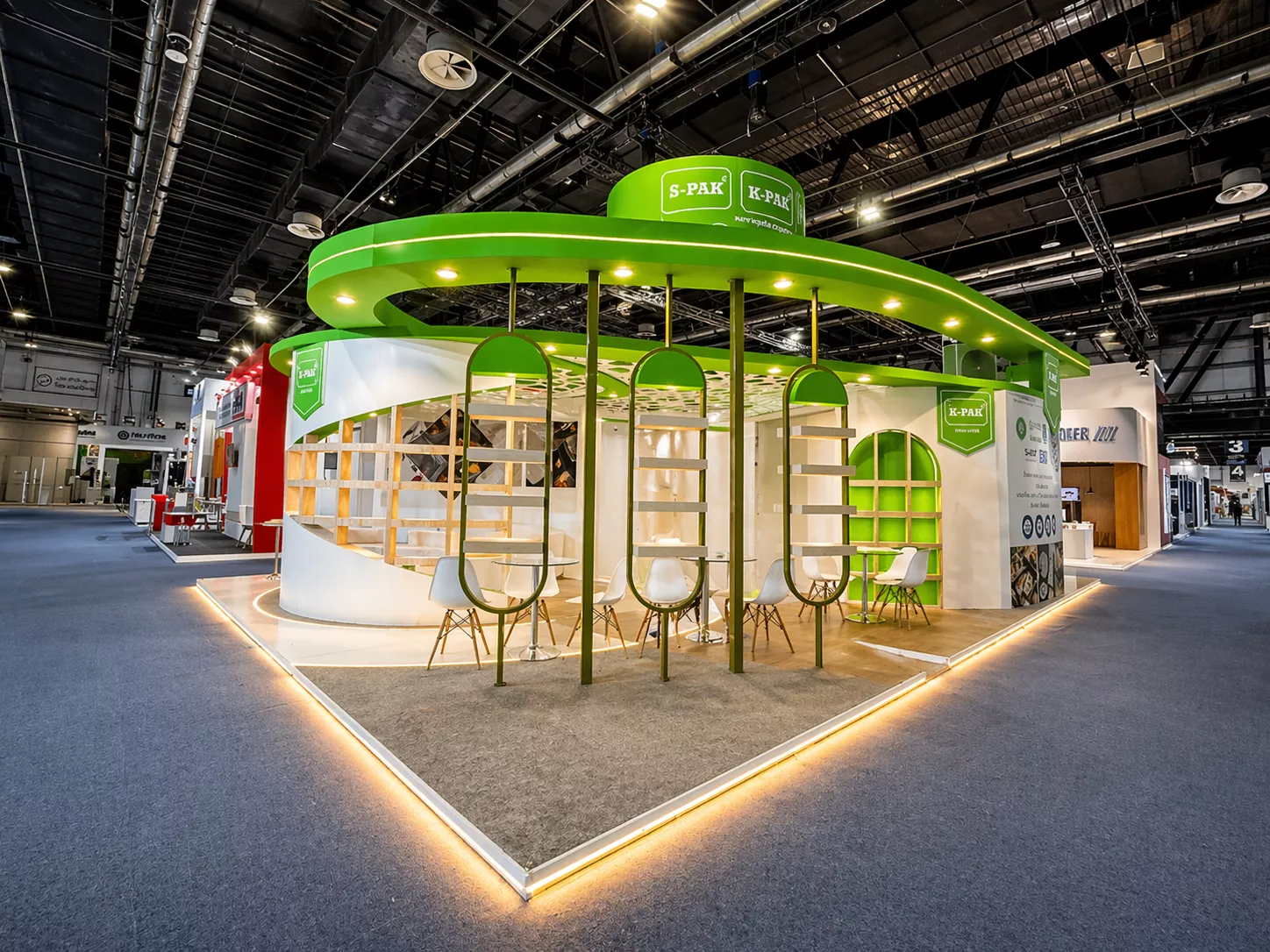

The modern trade show floor is a sensory overload a mix of high-decibel pitches, heavy foot traffic, and constant interruptions. For your most high-value clients, this environment is a deterrent, not a draw. The double-decker exhibition stand introduces a new dimension: The Sanctuary. By separating the high-energy product “theater” on the ground floor from the quiet, climate-controlled VIP lounges above, you create an exclusive ecosystem for closing deals. It’s about more than space; it’s about controlling the atmosphere. Let’s look at how two-story architecture allows you to run two different businesses simultaneously within the same booth.
Quick Comparison: Single-Tier vs. Double-Decker
Why Go Vertical?
Choosing a double-decker isn’t just about “having a balcony.” It’s about psychological and functional dominance. Here is why the world’s leading brands are investing in verticality:
1. The “Beacon” Effect
In a sea of standard modular booths, a two-story structure acts as a landmark. You aren’t just an exhibitor; you are a destination. This inherent authority draws foot traffic naturally because human psychology equates height with industry leadership.
2. Radical Space Optimization
In premium venues like the Dubai World Trade Centre or Messe Frankfurt, floor space is gold. A double decker exhibition stands in Dubai allows you to utilize the same $10,000$ to $20,000$ square-foot footprint to include a kitchen, a VIP lounge, three meeting rooms, and a product demonstration area functions that would normally require double the floor rent.
3. Tiered Engagement Strategy
A double-decker allows you to segment your audience effectively:
- The Ground Floor: High-energy, interactive, and open to the general public for lead scanning and product demos.
- The Upper Deck: A sanctuary of calm for “High-Value Targets” (HVTs). This is where the contracts are signed, away from the noise and bustle of the aisles.
Types of Double-Decker Structures: Choosing Your Framework
Not all multi-tier stands are built the same. Depending on your budget, brand identity, and logistical constraints, you can choose from several structural philosophies.
A. The Structural Steel System (The Heavyweight)
This is the “Old Guard” of two-story stands. Utilizing heavy-duty steel girders, these structures are incredibly robust and can support significant weight, including heavy furniture or large groups of people.
- Best for: Large-scale industrial brands or long-term roadshows where the structure will be reused frequently.
- Pros: Virtually no vibration; feels like a permanent building.
B. The Modular Aluminum System (The Tech-Forward Choice)
Systems like Mezzanine or Octanorm provide a lighter, faster alternative. These use high-grade aluminum extrusions that “click” together.
- Best for: Brands needing a modern, sleek look with shorter installation windows.
- Pros: Sustainable (reusable components) and lower shipping costs due to reduced weight.
C. The Hybrid Custom Build (The Showstopper)
This combines structural skeletons with custom CNC-routed wood, fabric lightboxes, and glass finishes.
- Best for: Luxury brands, automotive companies, and tech giants who want a “one-of-a-kind” architectural masterpiece.
- Pros: Unlimited design freedom.
Strategic Design: Beyond the Staircase
A common mistake is treating the second floor as an afterthought. To truly maximize the value, your design must be intentional.
Zoning the Experience
Think of your stand as a retail funnel. The ground floor should be “The Hook.” Use motion sensors, large LED walls, and interactive kiosks to grab attention. As visitors show genuine interest, they are invited “upstairs”—a physical elevation that mirrors their progress in the sales funnel.
The Importance of Sightlines
From the top deck, your team has a literal “eye in the sky.” This allows sales managers to spot key prospects approaching the booth from three aisles away, giving the ground team a heads-up via internal headsets.
Lighting and Atmosphere
The ground floor often suffers from shadows created by the ceiling of the second floor. High-intensity LED ribbons and integrated “skylight” panels are essential to ensure the bottom tier doesn’t feel like a basement. Conversely, the top tier should utilize softer, warmer lighting to encourage long-form conversation.
Logistics, Regulations, and Safety (The “Invisible” Essentials)
Building high comes with high responsibility. Navigating the legalities is where many first-timers stumble.
1. The “Statics” Report
Most major exhibition organizers require a structural engineer’s report (statics) before construction begins. This ensures the floor can handle the weight (expressed in $kg/m^2$) and that the structure won’t buckle under a crowd.
2. Fire Safety and Egress
When you add a second floor, you add a “dead end” for fire safety. Depending on the venue, you may be required to install:
- Integrated smoke detectors.
- Dual staircases (if the upper floor exceeds a certain square footage).
- Fire-rated materials for all structural cladding.
3. Accessibility (ADA Compliance)
In many regions, if you offer a service or experience on the second floor, you must provide an equivalent experience on the ground floor for those with mobility issues or install a platform lift.
Maximizing ROI: Is a Double-Decker Worth It?
While the initial cost of a double-decker can be $2\times$ to $3\times$ that of a single-tier stand, the ROI calculation shifts when you consider the “cost per quality lead.”
- Savings on Hospitality: Instead of taking clients to a nearby restaurant (where you lose their attention to the environment), you host them on-site.
- Brand Equity: The prestige of a double-decker often results in more organic press coverage and social media mentions.
- Meeting Efficiency: You can run 4–5 meetings simultaneously in private pods upstairs, significantly increasing the volume of high-level interactions per show.
Future Trends: The Digital-Vertical Fusion
As we move toward 2027 and beyond, double-deckers are evolving. We are seeing:
- Transparent LED Glass: The railings of the second floor are being replaced with glass that doubles as a video screen, allowing for “floating” holographic advertisements.
- Kinetic Architecture: Elements of the second floor that can rotate or shift to create new spaces throughout the day.
- Sustainability-First Tiers: Structures made entirely from cross-laminated timber (CLT) or recycled aluminum, reducing the carbon footprint of these massive builds.
Conclusion
A double-decker exhibition stand is more than just a construction project; it is a statement of intent. It tells your competitors, your clients, and the industry that you are a dominant force. By effectively doubling your space, segmenting your audience, and owning the “high ground,” you transform a simple trade show appearance into a comprehensive brand experience.
Double-Decker Exhibition Stand FAQs
1. Why should I choose a double-decker exhibition stand?
A double-decker exhibition stand maximizes your exhibition space by creating two functional levels. The ground floor is ideal for product demonstrations and visitor engagement, while the upper deck provides private meeting rooms, VIP lounges, and hospitality areas. It also enhances brand visibility and creates a stronger presence on the exhibition floor.
2. Are double-decker exhibition stands worth the investment?
Although double-decker stands cost more than single-level stands, they often deliver a higher return on investment by providing additional meeting space, improving lead quality, reducing external hospitality costs, and strengthening brand perception at major trade shows.
3. What types of double-decker exhibition stands are available?
The most common options include structural steel systems for maximum durability, modular aluminum systems for faster installation and reusability, and hybrid custom-built stands that combine structural frameworks with premium finishes for a unique and fully customized brand experience.
4. Do double-decker exhibition stands require special approvals?
Yes. Most exhibition venues require structural engineering calculations, fire safety compliance, and organizer approval before installation. Depending on the venue, additional requirements such as dual staircases, smoke detection systems, and accessibility provisions may also apply.
5. Which businesses benefit most from a double-decker exhibition stand?
Double-decker exhibition stands are ideal for technology companies, automotive brands, luxury businesses, industrial manufacturers, and global exhibitors that need private meeting areas, hospitality spaces, and a highly visible presence at major trade shows.
6. Can a double-decker exhibition stand be reused at multiple events?
Yes. Many modular and hybrid double-decker exhibition stands are designed for repeated use across multiple exhibitions. With proper storage, transportation, and maintenance, businesses can significantly reduce long-term exhibiting costs while maintaining a consistent and professional brand presence.